SaaS App Protection Framework

/
Context
/
Context
Expand a new SaaS vertical
as enterprise data migrates to SaaS
Expand a new SaaS vertical
as enterprise data migrates to SaaS
As enterprises increasingly rely on SaaS as their primary data layer, Rubrik entered a new SaaS vertical. This required rethinking the platform for a new persona, new mental models, and fundamentally different workflows.
As enterprises increasingly rely on SaaS as their primary data layer, Rubrik entered a new SaaS vertical. This required rethinking the platform for a new persona, new mental models, and fundamentally different workflows.
/
Project Goal
/
Project Goal
/
Project Goal
Build a foundation for SaaS data protection at scale
Build a foundation for SaaS data protection at scale
As Rubrik expanded into SaaS, the challenge was not only to support more apps,
but to design a system that could scale across fundamentally different data models, workflows, and user needs.
Our goal was to build a framework that enables:
Scalable coverage across diverse SaaS applications
Consistent user experience despite platform differences
Faster product delivery without sacrificing system coherence
As Rubrik expanded into SaaS, the challenge was not only to support more apps,
but to design a system that could scale across fundamentally different data models, workflows, and user needs.
Our goal was to build a framework that enables:
Scalable coverage across diverse SaaS applications
Consistent user experience despite platform differences
Faster product delivery without sacrificing system coherence
/
Solution
/
Solution
/
Solution
Streamlined the fragmented setup flows
into a guided, preset-driven experience.
Streamlined the fragmented setup flows
into a guided, preset-driven experience.
Instead of requiring users to configure multiple settings across scattered steps, I designed a guided setup framework that preconfigured key parameters and automated dependencies.
Users could complete complex SaaS setup in a few clicks, significantly reducing setup time from hours to minutes and improving overall usability.
Instead of requiring users to configure multiple settings across scattered steps, I designed a guided setup framework that preconfigured key parameters and automated dependencies.
Users could complete complex SaaS setup in a few clicks, significantly reducing setup time from hours to minutes and improving overall usability.
/
Solution
/
Solution
/
Solution
Helping users choose the right snapshot with confidence
Helping users choose the right snapshot with confidence
Solved the uncertainty of snapshot selection in restore workflows. Enterprise users often struggled to choose the right snapshot because they lacked visibility into what data actually existed at each point in time.
This made restore decisions risky and stressful, especially in high-stakes scenarios.
We introduced a Compare feature that allowed users to inspect and compare data changes across snapshots before restoring. By making differences explicit, users could identify the correct snapshot with confidence — transforming restore from a guess into an informed decision.
Solved the uncertainty of snapshot selection in restore workflows. Enterprise users often struggled to choose the right snapshot because they lacked visibility into what data actually existed at each point in time.
This made restore decisions risky and stressful, especially in high-stakes scenarios.
We introduced a Compare feature that allowed users to inspect and compare data changes across snapshots before restoring. By making differences explicit, users could identify the correct snapshot with confidence — transforming restore from a guess into an informed decision.
/
Solution
/
Solution
/
Solution
Letting users see what else will be affected before restoring data
Letting users see what else will be affected before restoring data
Turned invisible dependencies into actionable insights. Instead of restoring isolated objects, we designed a system that mapped hierarchical relationships across SaaS data structures.
Before restoring, users could preview the ripple effects of data loss and recovery, enabling them to decide what to restore with full awareness of dependencies. This significantly reduced manual effort and prevented structural data corruption caused by blind restores.
Turned invisible dependencies into actionable insights. Instead of restoring isolated objects, we designed a system that mapped hierarchical relationships across SaaS data structures.
Before restoring, users could preview the ripple effects of data loss and recovery, enabling them to decide what to restore with full awareness of dependencies. This significantly reduced manual effort and prevented structural data corruption caused by blind restores.
/
Impact
/
Impact
/
Impact
When clearer decisions unlocked a new SaaS vertical
Won Rubrik Top Innovation Award of 2025
When clearer decisions unlocked a new SaaS vertical
Won Rubrik Top Innovation Award of 2025
View recent launches: Jira (2023), Salesforce ( 2024), Microsoft Dynamics (2025), Google Workspace (2026).
Established a scalable SaaS platform foundation
The framework became the foundation for Rubrik’s SaaS App Protection product line
Established a scalable SaaS platform foundation
The framework became the foundation for Rubrik’s SaaS App Protection product line
Established a scalable SaaS platform foundation
The framework became the foundation for Rubrik’s SaaS App Protection product line
Won the Top Innovation Award of 2025
Recognized as “Top Innovation of the Year” for its intuitive and scalable design.
Won the Top Innovation Award of 2025
Recognized as “Top Innovation of the Year” for its intuitive and scalable design.
Won the Top Innovation Award of 2025
Recognized as “Top Innovation of the Year” for its intuitive and scalable design.
Improved enterprise adoption through intuitive workflows
Intuitive workflows significantly increased enterprise adoption and conversions.
Improved enterprise adoption through intuitive workflows
Intuitive workflows significantly increased enterprise adoption and conversions.
Improved enterprise adoption through intuitive workflows
Intuitive workflows significantly increased enterprise adoption and conversions.
Accelerated multi-product expansion
Enabled rapid integrations with Jira, Salesforce, Microsoft Dynamics, and Google Workspace.
Accelerated multi-product expansion
Enabled rapid integrations with Jira, Salesforce, Microsoft Dynamics, and Google Workspace.
Accelerated multi-product expansion
Enabled rapid integrations with Jira, Salesforce, Microsoft Dynamics, and Google Workspace.
Abstracted platform differences into a scalable product architecture
Built to scale across multiple SaaS platforms and enterprise environments.
Abstracted platform differences into a scalable product architecture
Built to scale across multiple SaaS platforms and enterprise environments.
Abstracted platform differences into a scalable product architecture
Built to scale across multiple SaaS platforms and enterprise environments.
Unlocked a new SaaS vertical
Established the foundation for Rubrik’s SaaS App Protection vertical.
Unlocked a new SaaS vertical
Established the foundation for Rubrik’s SaaS App Protection vertical.
Unlocked a new SaaS vertical
Established the foundation for Rubrik’s SaaS App Protection vertical.
Project Timeline
4 months (01/2024 - 04/2024)
Team Setup
1 Product Manager, 7 Engineers
My Contribution
Led an end-to-end design process, translating complex user needs into clear system and experience models. Validated key assumptions through rapid prototyping and aligned PM and engineering from concept to launch.
/
My Role
/
My Role
/
My Role
Owned the decision framework that turned SaaS complexity into a platform
Owned the decision framework that turned SaaS complexity into a platform
Project Timeline
4 months (Jan - Apr, 2024)
Team Setup
1 Product Manager, 7 Engineers
My Contribution
Led an end-to-end design process, translating complex user needs into clear system and experience models. Validated key assumptions through rapid prototyping and aligned PM and engineering from concept to launch.
/
The Most Memorable Moment
/
The Most Memorable Moment
/
The Most Memorable Moment
When certainty never came, I chose to move anyway.
When certainty never came,
I chose to move anyway.
When certainty never came, I chose to move anyway.
This project was the first time I truly felt what real ambiguity looks like. We couldn’t recruit users for weeks, expert opinions felt convincing but risky, and AI-generated ideas only added more noise. I realized that waiting for perfect certainty was itself the biggest risk. Instead of trying to eliminate ambiguity, I learned to identify the most fragile assumptions, test them early, and adjust fast. That moment reshaped how I design: clarity isn’t something you think your way into—it’s something that emerges through action.
This project was the first time I truly felt what real ambiguity looks like. We couldn’t recruit users for weeks, expert opinions felt convincing but risky, and AI-generated ideas only added more noise. I realized that waiting for perfect certainty was itself the biggest risk. Instead of trying to eliminate ambiguity, I learned to identify the most fragile assumptions, test them early, and adjust fast. That moment reshaped how I design: clarity isn’t something you think your way into—it’s something that emerges through action.
Designing the Product Was Easy.
Designing Alignment Was Hard.
Designing the Product Was Easy. Designing Alignment Was Hard.
/
Confidence → Collision
/
Confidence → Collision
/
Confidence → Collision
I learned that being right means nothing if the story breaks elsewhere
I learned that being right means nothing if the story breaks elsewhere
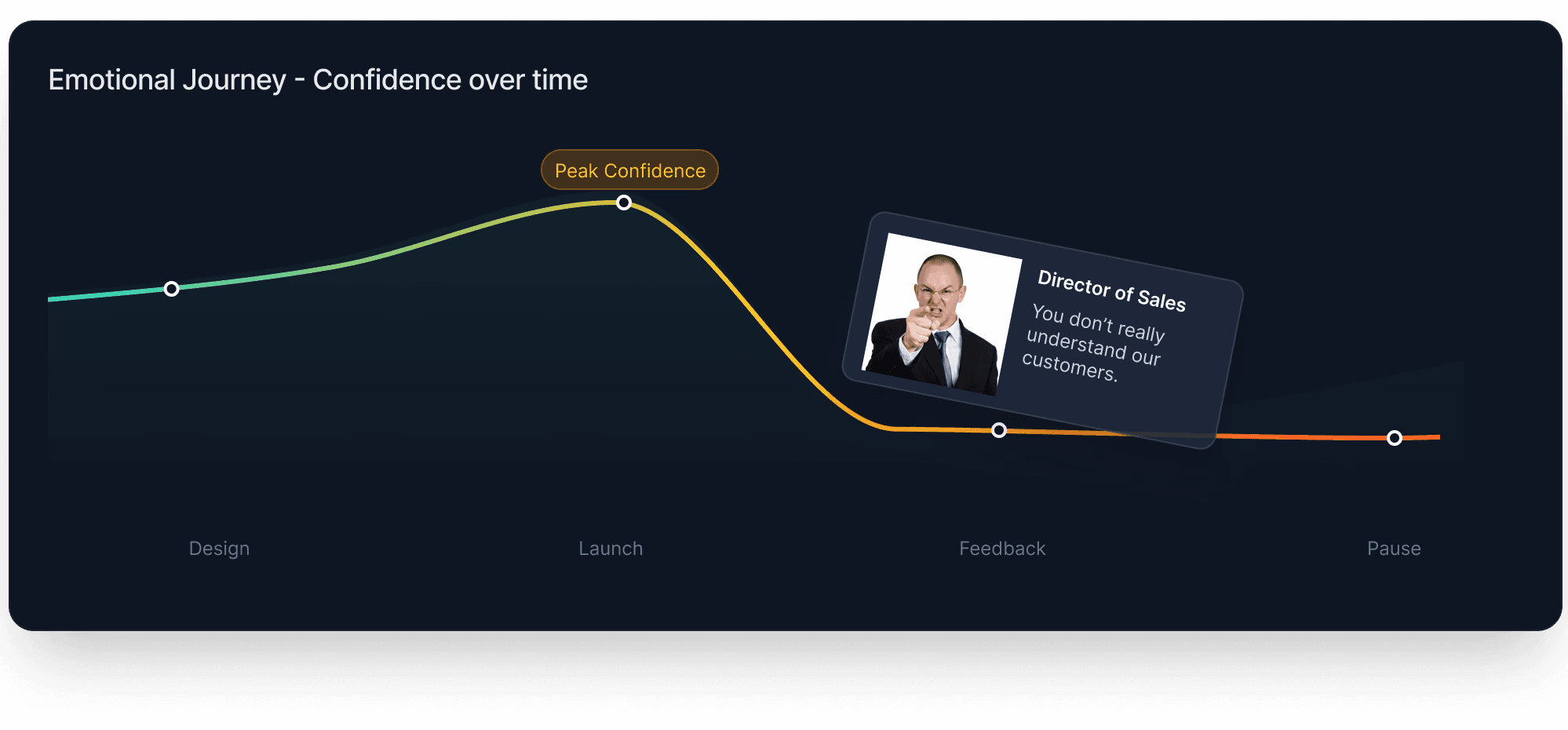
When the Salesforce protection product launched, I felt confident in the work. We had designed with real users in mind, and I believed the experience would strengthen our competitive edge. That confidence shattered the day I was added to a Slack channel full of sales feedback. The message was blunt: “You don’t really understand our customers.” Instead of reacting defensively, I paused. If a design grounded in user research was failing in the field, the problem couldn’t be surface-level. That moment forced me to confront a hard truth: a product doesn’t live in design reviews—it lives in conversations people have about it.
When the Salesforce protection product launched, I felt confident in the work. We had designed with real users in mind, and I believed the experience would strengthen our competitive edge. That confidence shattered the day I was added to a Slack channel full of sales feedback. The message was blunt: “You don’t really understand our customers.” Instead of reacting defensively, I paused. If a design grounded in user research was failing in the field, the problem couldn’t be surface-level. That moment forced me to confront a hard truth: a product doesn’t live in design reviews—it lives in conversations people have about it.
/
From defense to diagnosis
/
From defense to diagnosis
/
From defense to diagnosis
I reframed resistance as a signal, not a rejection
I reframed resistance as a signal,
not a rejection
I reframed resistance as a signal, not a rejection
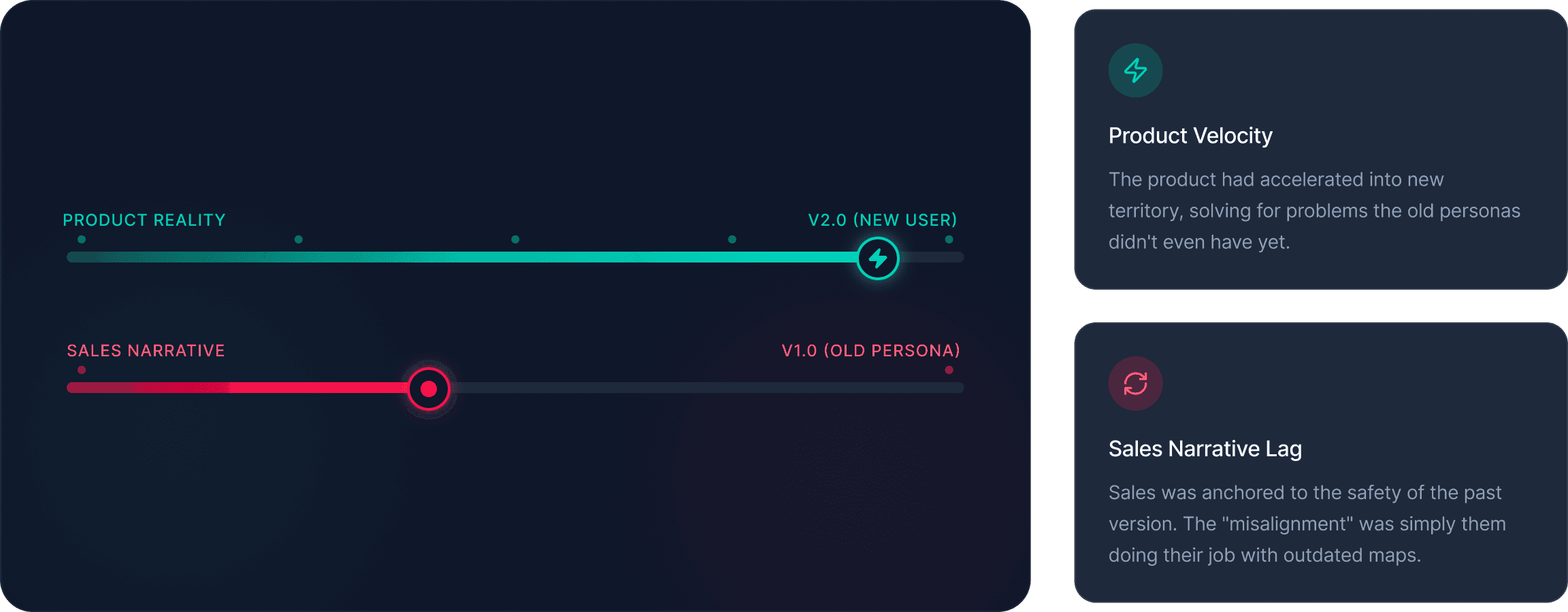
My instinct wasn’t to defend the design, but to understand the reaction behind it. Working with the PM, I traced the feedback back to its source. What surfaced wasn’t disagreement—it was misalignment. Sales was still operating with old personas and an old narrative, while we had quietly shifted toward a new user group. From their perspective, the product felt inconsistent, even risky. Once I saw this, the tension made sense. The conflict wasn’t between design and sales; it was between two realities moving at different speeds.
My instinct wasn’t to defend the design, but to understand the reaction behind it. Working with the PM, I traced the feedback back to its source. What surfaced wasn’t disagreement—it was misalignment. Sales was still operating with old personas and an old narrative, while we had quietly shifted toward a new user group. From their perspective, the product felt inconsistent, even risky. Once I saw this, the tension made sense. The conflict wasn’t between design and sales; it was between two realities moving at different speeds.
/
Influence without authority
/
Influence without authority
/
Influence without authority
I shifted the conversation from features to belief
I shifted the conversation from features to belief
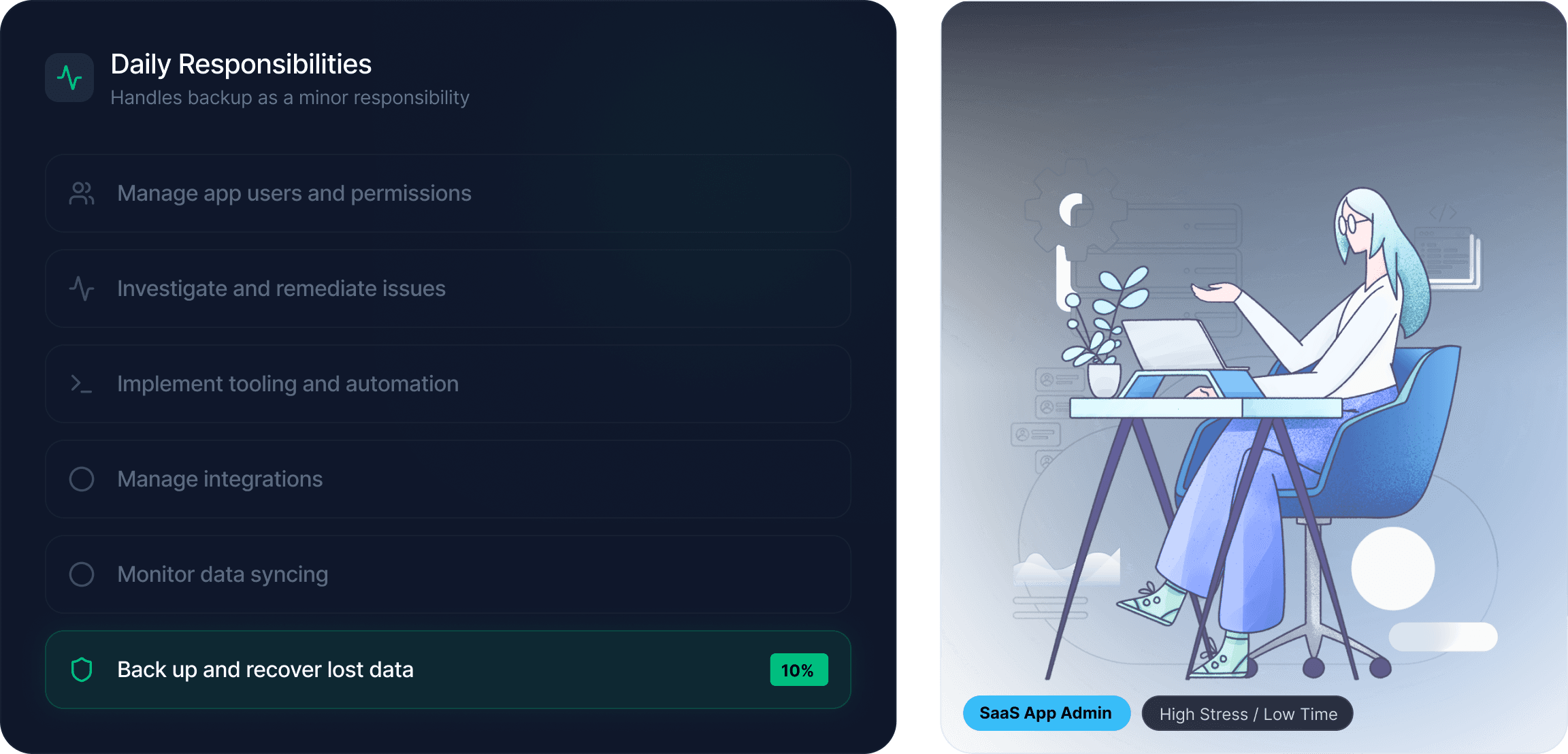
At that point, I knew explaining screens wouldn’t fix the problem. I needed to change how the product was understood. I partnered with a researcher and another PM and organized a session with sales. We avoided features entirely. Instead, we started with users—how the new persona emerged, how their mental model differed, and what they felt along the journey. I walked through the experience from the user’s point of view, and the researcher shared short testing clips. I watched the room change. Skepticism softened. People stopped pushing back and started asking better questions.
At that point, I knew explaining screens wouldn’t fix the problem. I needed to change how the product was understood. I partnered with a researcher and another PM and organized a session with sales. We avoided features entirely. Instead, we started with users—how the new persona emerged, how their mental model differed, and what they felt along the journey. I walked through the experience from the user’s point of view, and the researcher shared short testing clips. I watched the room change. Skepticism softened. People stopped pushing back and started asking better questions.
/
Choosing the harder win
/
Choosing the harder win
/
Choosing the harder win
I protected the new experience without breaking the old story
I protected the new experience without breaking the old story
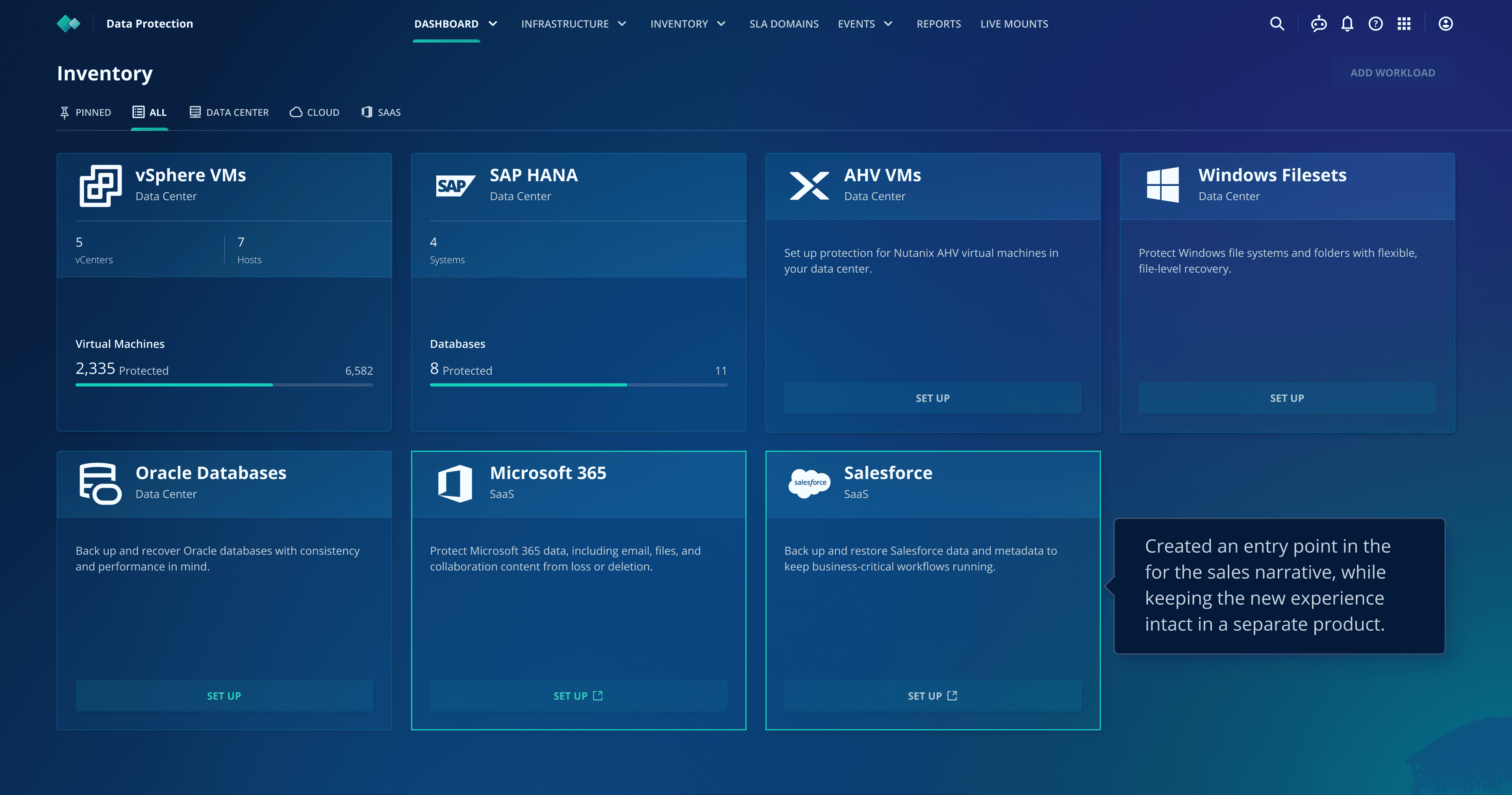
Even after alignment, I faced a real tradeoff. Sales wanted to preserve the existing platform narrative, while the new user group needed focus and simplicity. I chose not to force a single winner. Instead, I proposed a deliberate compromise: keep the new experience intact, but create an entry point inside the existing platform that aligned with the old story. It wasn’t about pleasing everyone—it was about letting both sides succeed. That decision changed how I think about ownership. A decision only truly lands when the people who need to carry it forward believe in it.
Even after alignment, I faced a real tradeoff. Sales wanted to preserve the existing platform narrative, while the new user group needed focus and simplicity. I chose not to force a single winner. Instead, I proposed a deliberate compromise: keep the new experience intact, but create an entry point inside the existing platform that aligned with the old story. It wasn’t about pleasing everyone—it was about letting both sides succeed. That decision changed how I think about ownership. A decision only truly lands when the people who need to carry it forward believe in it.
/
What This Changed for Me
/
What This Changed for Me
/
What This Changed for Me
Product strategy doesn’t land unless go-to-market moves with it
Product strategy doesn’t land unless go-to-market moves with it
This experience changed how I think about product strategy. I learned that a product strategy is incomplete if it only exists within the product team. Designing a new user experience without aligning the go-to-market narrative creates hidden risk—no matter how strong the design is. Since then, I’ve become more intentional about treating product strategy and go-to-market strategy as two parts of the same system. When one evolves, the other needs to move in parallel. My role as a designer expanded beyond shaping interfaces to shaping shared understanding across teams.
This experience changed how I think about product strategy. I learned that a product strategy is incomplete if it only exists within the product team. Designing a new user experience without aligning the go-to-market narrative creates hidden risk—no matter how strong the design is. Since then, I’ve become more intentional about treating product strategy and go-to-market strategy as two parts of the same system. When one evolves, the other needs to move in parallel. My role as a designer expanded beyond shaping interfaces to shaping shared understanding across teams.